How Trenchless Technology Works for Underground Utility Installations
When utilities need to cross roads, rail corridors, driveways, landscaped areas, or developed sites, traditional open-cut excavation is not always the best option. Digging a full trench can create traffic disruption, damage existing surfaces, increase reinstatement costs, and slow down the broader project. That is why trenchless technology is often preferred for modern utility work. It allows key services to be installed underground with far less disturbance at the surface.
For clients, engineers, contractors, and council teams, the value of trenchless work is not just that it avoids digging. The method can improve efficiency, reduce environmental impact, and make installation possible in locations where open-cut methods would be risky or impractical. If you are comparing options for Darwin directional drilling or broader trenchless utility works, it helps to understand how the main methods operate and where each one fits.
What Trenchless Technology Means in Practical Terms
Trenchless technology is a broad term for underground installation methods that minimise the need for continuous open excavation. Instead of digging a trench along the full length of the service, the contractor works from entry and exit points, shafts, or launching pits, depending on the method used. The service is then installed underground using drilling, boring, jacking, or tunnelling techniques.
In practical terms, trenchless technology is often chosen when a project needs to:
- cross under roads, waterways, or developed surfaces
- reduce disruption to traffic, businesses, or residents
- protect existing landscaping or infrastructure
- install utilities through difficult or sensitive locations
This does not mean trenchless is always the answer. It means it is often the better answer when surface access, reinstatement cost, or project constraints make open-cut excavation less suitable.
Horizontal Directional Drilling: How HDD Installs Services Without Open Trenches
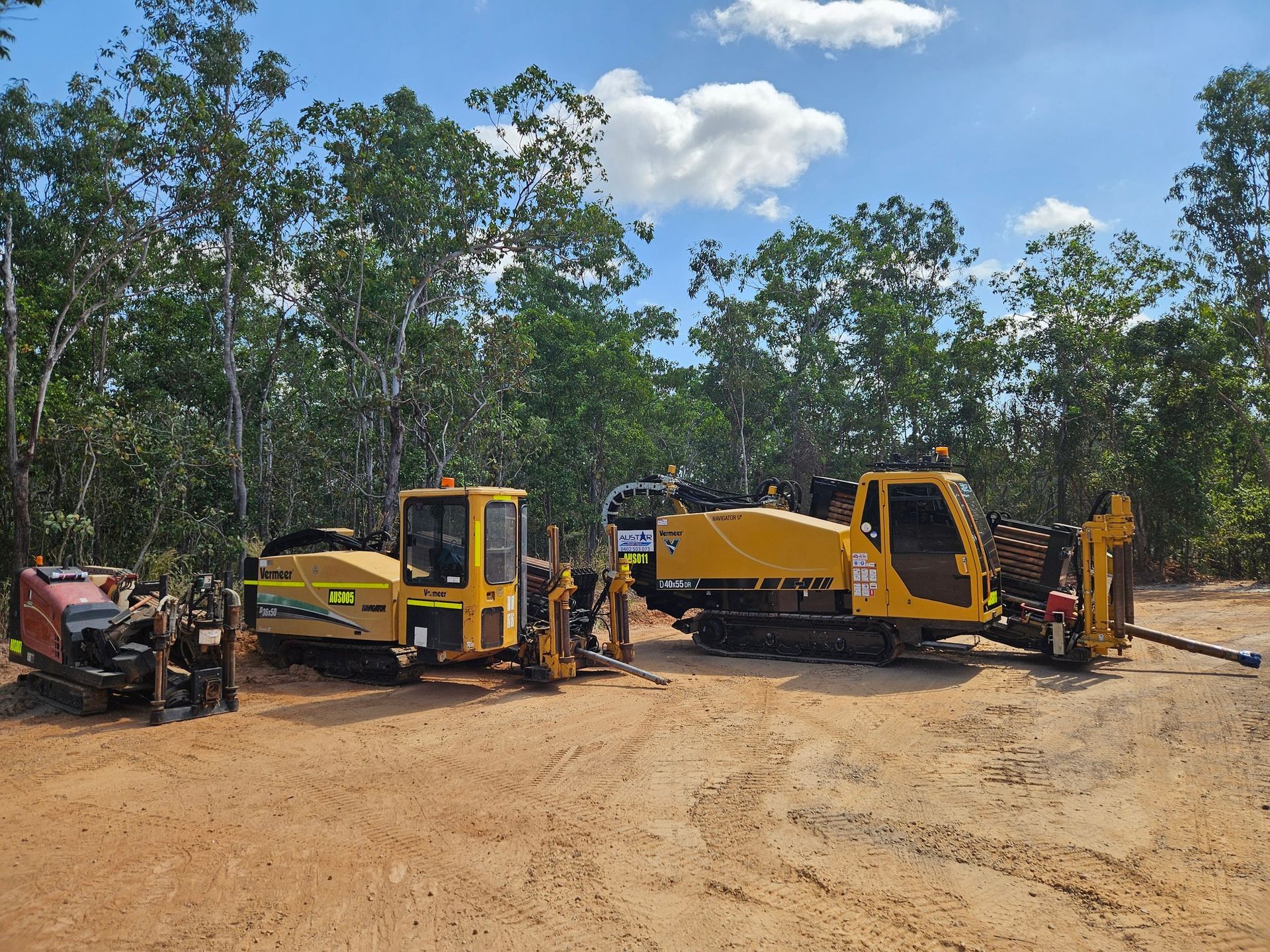
Horizontal directional drilling, or HDD, is one of the best-known trenchless methods. It is commonly used for installing conduits, communication lines, water lines, gas lines, and similar services where a guided underground path is needed between two points.
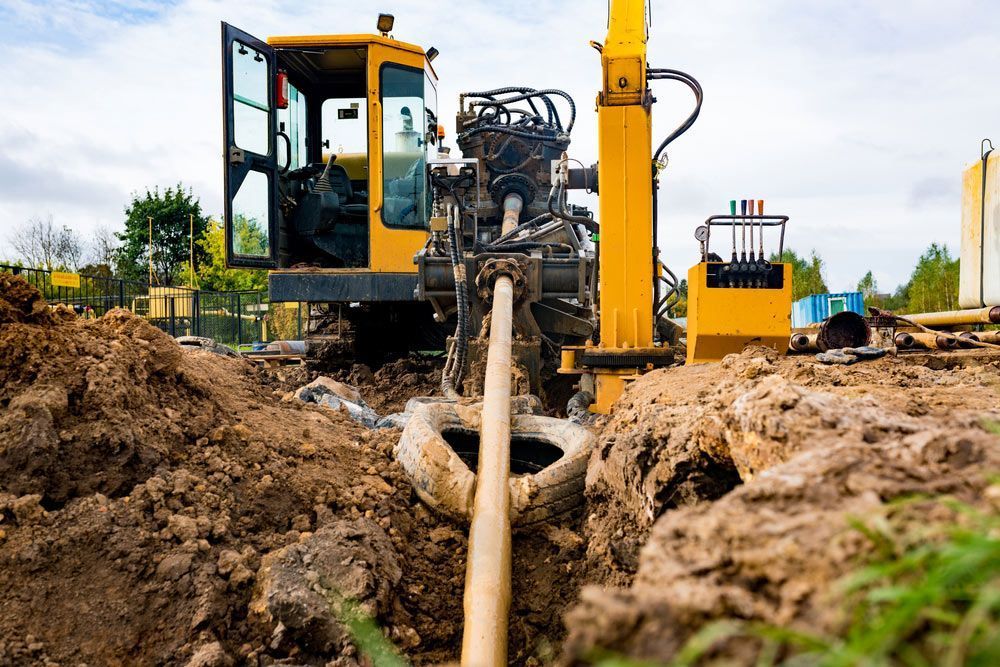
The process usually starts with a pilot bore. A drill head is guided underground along the planned alignment while operators track depth and direction. Once the pilot path is completed, the bore is enlarged in stages using reamers. After that, the product pipe or conduit is pulled back through the enlarged bore.
This method is widely used because it offers flexibility in alignment and allows utilities to pass beneath obstacles without opening the full surface above. In directional drilling in Darwin, HDD is often valuable where projects need to avoid road closures, preserve finished surfaces, or work around existing infrastructure with minimal disruption.
Pipe Jacking and Microtunnelling: When More Controlled Methods Are Needed
While HDD is highly useful, some projects need a different level of control. Pipe jacking and microtunnelling are trenchless methods often used for gravity pipelines, larger-diameter installations, or projects where grade accuracy is critical.
Pipe jacking works by pushing pipes through the ground from a launch shaft toward a reception shaft. Excavation at the face happens progressively as the pipe advances. Microtunnelling is a more specialised form of remote-controlled tunnelling that uses a microtunnel boring machine, slurry or spoil removal systems, and precise guidance controls.
These methods may be preferred when:
- the installation needs strict grade control
- the diameter is larger than a typical HDD product pipe
- the ground conditions suit shaft-based construction
- the project requires a highly controlled alignment
Compared with HDD, these approaches usually involve more setup, but they can offer better control for certain pipeline types.
The Step-by-Step Process of a Trenchless Utility Installation
Although the details vary by method, trenchless installations usually follow a clear sequence. The project starts with design, planning, and service investigation. Once the route and method are confirmed, the contractor prepares access points and mobilisation areas.
A simplified trenchless workflow often looks like this:
- review drawings, subsurface information, and service locations
- confirm route, entry and exit points, or shaft positions
- mobilise plant and establish safety controls
- complete the pilot bore, tunnelling pass, or jacking setup
- enlarge or prepare the path if required
- install the product pipe, conduit, or casing
- test, verify, and complete final connections
The exact sequence can differ depending on the utility type, the bore length, and the method used, but the underlying principle stays the same: do as much of the work underground as possible while controlling the surface impact.
Where Trenchless Methods Work Best for Water, Gas and Communications
Trenchless methods are especially useful where utility routes need to pass through busy or constrained environments. Water, gas, electrical, and communications installations can all benefit when the surface above is expensive, sensitive, or difficult to restore.
Common applications include:
- road and highway crossings
- rail corridor crossings
- river or drain crossings
- urban service corridors
- industrial and commercial developments
- utility upgrades in established areas
For directional drilling in Darwin, this often means projects can keep existing roads, hardstands, and developed land more intact while still delivering the underground service route the project requires.
Why Less Surface Disruption Can Mean Lower Project Costs
Trenchless methods are often discussed as a premium solution, but in many projects they can reduce total cost when surface impacts are considered properly. Open-cut excavation may look simpler at first, but the real cost includes traffic management, spoil removal, reinstatement, lost access, environmental controls, and the broader time impact on the site.
When trenchless methods reduce the amount of reinstatement required, they can protect project budgets in areas where surface restoration would otherwise be extensive or expensive. Less surface disturbance can also reduce delays for nearby businesses, residents, and other contractors working in the area.
The financial benefit is not only about the bore itself. It is about the full project picture:
- less demolition and reinstatement
- reduced disruption to access and traffic
- less impact on finished surfaces and landscaping
- fewer interface issues with surrounding site activities
Safety, Ground Conditions and Planning: What Has to Be Checked First
Trenchless work is not a shortcut around planning. In many cases, it requires more upfront investigation than open-cut methods because success depends on knowing what is underground and how the ground is likely to behave.
Important early checks include:
- existing service locating and subsurface utility information
- geotechnical conditions and likely ground behaviour
- route constraints and depth requirements
- product pipe size, material, and installation limits
- launch, exit, or shaft access
- environmental and traffic management requirements
Safety planning is also essential. Drill or tunnelling crews need clear separation from live services, stable working zones, and method-specific controls. For Darwin directional drilling projects, the quality of planning often determines whether the installation proceeds smoothly or becomes difficult once equipment is on the ground.
Why Trenchless Installation Is Often Preferred Over Open-Cut Excavation
Trenchless installation is often preferred because it aligns with the realities of modern infrastructure work. Clients want utilities installed without unnecessary disruption. Contractors want methods that reduce interface issues and protect the broader schedule. Asset owners want reliable installations with less damage to surrounding areas.
That does not mean trenchless always replaces open-cut excavation. Some projects still suit conventional trenching. But when the route crosses roads, developed land, sensitive surfaces, or constrained corridors, trenchless methods can offer clear advantages in access, risk management, and reinstatement cost.
Plan Your Next Trenchless Installation in Darwin
We at
Austar Underground Services help clients understand where Darwin directional drilling and other trenchless methods fit best, from early planning through to installation. If your project needs
directional drilling in Darwin or a practical trenchless solution for underground utility work,
contact us to discuss the route, constraints, and the most suitable method for the job.